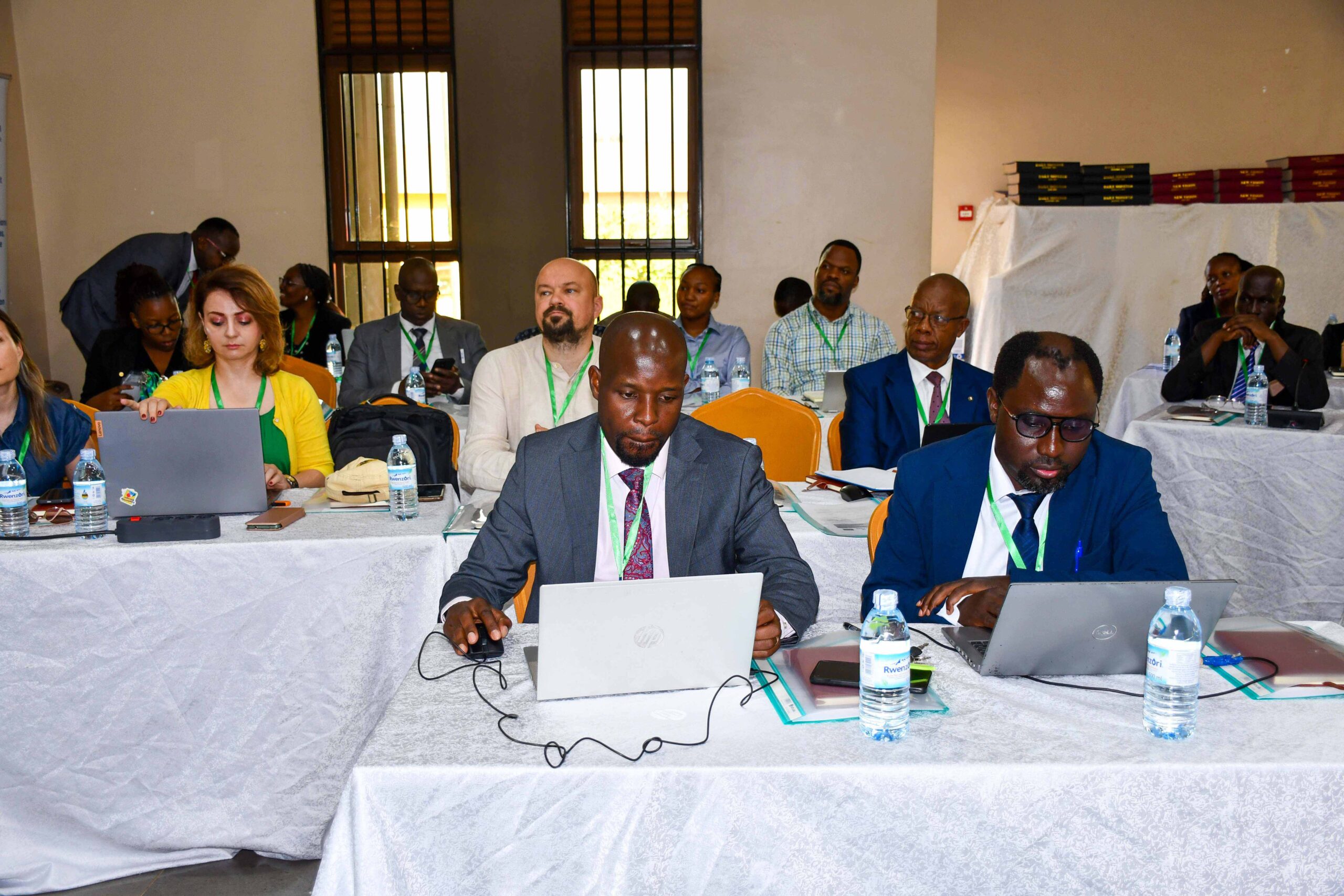

The PLEDGE Stakeholders Conference closed with a panel discussion that asked the question everyone in the room had been circling for three days: how does Uganda move from ideas and pilot projects to systemic, scalable change in higher education?
Moderated by Prof. Pius Coxwell Achanga, Vice Chancellor of Mountains of the Moon University, the panel brought together Dr. Vincent Ssembatya of the National Council for Higher Education, Prof. Ralf Schaulderer of the University of Applied Sciences Triesdorf, Prof. Patrick Kyamanywa, Vice Chancellor of Uganda Martyrs University, Dr. Richard Ouma of NCHE, Mr. Florian Knaus, CEO of Biosyntec, Ms. Annet Kyomuhangi, Assistant Commissioner for Dairy Development at MAAIF, and Commissioner Timothy Ssejoba of the Ministry of Education and Sports.
A shared vision, and a shared framework for getting there
Prof. Kyamanywa opened by pointing to Mackenzie's 7S framework as a way of thinking about change that goes beyond curriculum documents: strategy, structure, systems, staffing, style of leadership, and shared goals all have to move together for reform to stick.
That theme of alignment ran through the whole session. Commissioner Ssejoba confirmed the government's commitment and stressed the need for stakeholder buy in. Commissioner Kyomuhangi pointed to Uganda's National Development Plan IV and its ten-fold growth strategy as evidence that government commitment is already documented at the highest level, with agro-industrialisation named as a priority. Dr. Ouma returned repeatedly to mindset, arguing that Uganda needs deliberate change agents willing to challenge old assumptions. Prof. Schaulderer agreed, adding that once stakeholders share a vision for a profitable, job creating sector, the practical steps to get there become much easier to agree on.
Naming the internal barriers
Asked what stood in the way inside universities themselves, Prof. Kyamanywa reached for three historical figures to make his point: Christopher Columbus, who could not have crossed the ocean without losing sight of the shore, Thomas Jefferson, who argued that getting something new requires doing something new, and the observation, often attributed to Einstein, that repeating the same actions and expecting different results is a definition of insanity. His practical list of internal barriers included institutional culture and resistance to change, the difficulty of giving up an entire semester to practical placements, the cost of practical learning infrastructure, and a workforce question: universities will increasingly need practitioners with real farm experience training students, not only professors without hands on backgrounds.
Mr. Knaus offered the industry perspective on the same problem. He described reviewing job applications thick with qualifications but thin on actual skill, and said what he looks for now is trainability and a little real experience, not paper credentials. He also flagged a gap many graduates share: limited soft skills such as communication, teamwork, and project management, and little understanding of how their role fits into a company's broader supply chain.
How NCHE is preparing to accredit a different kind of education
Dr. Ouma described NCHE's own shift away from what he called the "banking concept" of education, where knowledge is deposited into students and withdrawn again at exam time, toward a model that evaluates the whole learner: head, hands, and practical competence together. NCHE has already issued minimum standards for CBET implementation, published templates for program development and review, and run training sessions to support institutions through the transition, with more training planned as a continuous process.
Closing the loop
Ms. Kyomuhangi brought the discussion back to the farmer, describing gaps in extension services (with staff currently supporting between 1,500 and 2,000 farmers each) and language and communication barriers between young graduates and the farming communities they are meant to serve. Mr. Knaus, pressed on why industry hesitates to open its doors to student placements, pointed to cost and unclear short term returns, and suggested government incentives and public recognition for companies that do invest in training partnerships.
Resolutions
The panel closed the conference by adopting four resolutions to guide the next phase of PLEDGE's work:
- Strengthening multi-stakeholder partnerships for skills development
- Mainstreaming green skills and sustainable development in education
- Institutionalising CBET and work based learning in Higher Education
- Developing and adopting policies that support CBET implementation
As the moderator noted in closing, changing an education system takes time, resources, and a willingness to encounter real challenges along the way. The consortium leaves Kampala with a shared vision and a clear set of commitments to carry it out.